Poker Game Development Services
We offer poker game development for companies who want to tap into the ever growing market of card games. RNG-certified logic, low-latency multiplayer, certification, and compliance-ready architecture are all key features of top poker game development services. With such expertise, Kevuru Games is a great technical partner for social casino and startup companies who need help in the gambling space.


What Is Poker Game Development?
Poker game development means building a playable poker product: a rules engine, RNG-driven shuffle and deal logic, multiplayer synchronization across the table, and the interface players actually touch.
A simple digital card game does not carry the fairness and latency standards that poker’s real-money and social variants both require. Certification and licensing requirements factor into the architecture from the first planning conversation, not something bolted on once a build is already running. A Texas Hold’em game development company has to stay engine-agnostic too. Platform, timeline, and budget usually decide whether a project runs on Unity, Unreal, or a custom engine.
Platform-Specific Development (Web, Mobile, Desktop)
A browser-based poker room, a mobile app, and a desktop client each handle latency and input differently. We build for whichever platform a client’s players actually use instead of stretching one build across all three.
Engine-Specific Development (Unity, Unreal, Custom)
Our Unity game development team handles the fast mobile and cross-platform builds Unity suits best. Unreal comes in when visual fidelity on the table outweighs build speed. Custom engines get used when a client already has backend infrastructure a poker client needs to plug into directly.
Real-Money vs. Social Poker: Key Differences
Real-money poker adds licensing obligations, jurisdiction-specific RNG certification, and payment compliance on top of everything a social product needs. Only six US states run live regulated online poker as of July 2026: Nevada, Delaware, New Jersey, Pennsylvania, Michigan, and West Virginia (Track360 regulatory tracker, 2026).
Regulated markets can still grow fast despite that fragmentation: France’s online poker market alone generated €525 million in gross gaming revenue in 2025, up 6.5% year over year (Autorité Nationale des Jeux, 2026).
Real-money licensing stays fragmented state by state. Social poker runs almost everywhere with far less regulatory weight, though it still needs a fair, verifiable RNG to earn player trust. Mixing the two up during planning is a common reason poker projects run over budget once legal review starts.
A packaged, one-size-fits-all poker build rarely clears certification in the most heavily regulated markets, where regulators often require local testing and market-specific compliance on top of a baseline RNG certification. This is where a generic, off-the-shelf poker game development services provider tends to fall short.
Kevuru Games builds the product and supports the certification process with the client’s chosen test lab. The operator holds the actual gambling license and stays responsible for legal compliance in every jurisdiction where the product launches.
We Build Poker Games For These Key Platforms

#Desktop

#WEB

#Mobile

Benefits of Poker Game Development with Kevuru Games
Poker game developers who specialize in this niche bring a different set of habits than a generalist mobile team. Here is what that looks like in our company:
- Effective team composition. A poker project gets a mix of gameplay engineers, backend and networking specialists, and QA, not a generalist team stretched across every task.
- Preserving core gameplay features. Custom rule variants, side pots, and table configurations carry over correctly.
- Transparent management. Regular builds and milestone reviews mean a client sees real progress, not a single reveal at the end of a long development cycle.
- Compliance support. We build with certification and licensing requirements in mind from the architecture stage.
Our Top-rated
Projects
Star Wars
- VR-based action-adventure game based on the legendary franchise
- Creating 3D characters with texture variations
Fortnite
- Iconic free-to-play Battle Royale game with over 400 million players worldwide
- Creating concept art for character skins
Iron Order 1919
- Cross-platform strategy game for mobile devices and browser
- Creating 3D models of mechs and soldiers, as well as their animations
Birdly
- VR-based hyperrealistic immersive butterfly flight simulator
- Creating ultra-realistic 3D models of insects, birds, and plants, as well as their animations
MechaChain
- Web3 game development
- Working on game design, art , sounds and engineering part
Undead Blocks
- The world’s first AAA play-to-earn zombie shooter game on the Ethereum network
- Creating 3D models of zombies, weapons, and environment, composing the music






Certified Excellence
Our development practices are certified to ISO 27001:2022 for information security management, covering how we handle sensitive project data, player information, and system access throughout a build.
Our Poker Game Development Process
Game Design & Rules Architecture

RNG & Backend Engineering

Multiplayer & Real-Time Networking

UI/UX & Table Design

Testing, Certification & Launch
Performance Optimization: Why It Matters
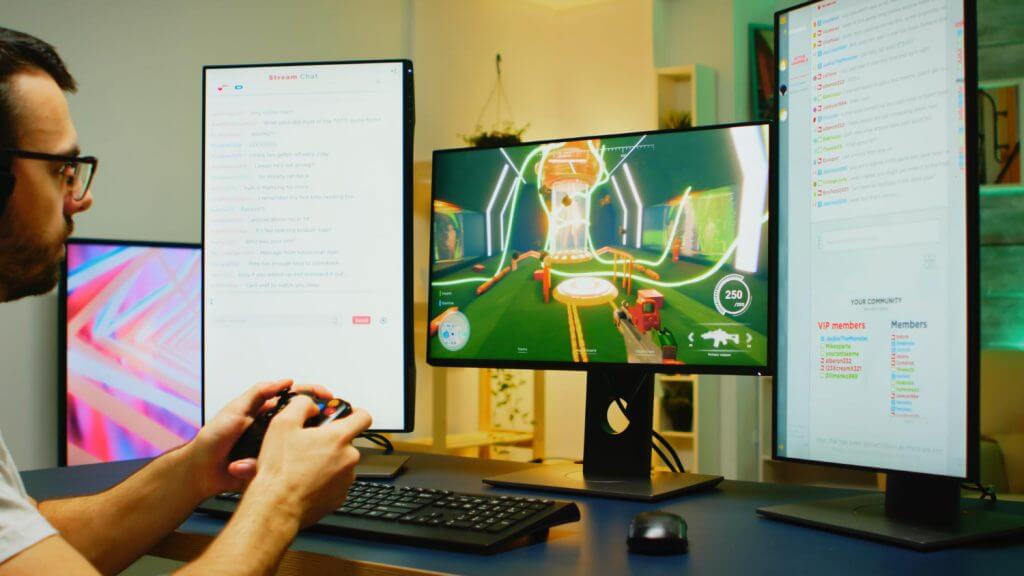
A laggy table costs more than a bug report. A player waiting half a second for a card to reveal starts wondering if something is off, and that suspicion sticks even after the delay clears. RNG fairness does not matter to a player who already stopped trusting the table. Performance work is part of the product itself, right alongside the shuffle logic, since a game that feels rigged gets abandoned regardless of what the math behind it actually says.
Technical Debt & Common Pitfalls in Poker Game Development
Outdated RNG implementations are the most expensive mistake we see. Replacing a shuffle algorithm after a product has real users means re-certifying the entire system, not just patching one function.
Latency bugs in multiplayer sync rarely show up in a QA environment with three test accounts. They surface once real concurrent load hits the servers, usually right after launch.
Migrating a legacy poker client onto new backend infrastructure often breaks table history and session logs. Those logs are exactly what a compliance audit asks for later.
A technical audit should come before any rebuild timeline gets promised. Operators who skip that step tend to find out the real scope of work partway through, once it is already costing them.
What a Poker Game Development Project Delivers
Every poker game development services engagement from our team ends with the same core handoff, regardless of platform or variant mix:
- Full source code with IP transferred to the client on project completion.
- An RNG-certified (or certification-ready) shuffle and deal engine.
- Server-side multiplayer infrastructure built for real-time table synchronization.
- An admin or CMS panel for managing tables, tournaments, and player accounts.
- QA and compliance documentation suited to the client’s target jurisdiction.
- Post-launch support for the period agreed in the project scope.
Why Choose Kevuru Games for Game Porting Services
Poker Game Development Cost Overview
| Social poker, single variant, one platform | $80,000 – $200,000 |
| Social poker, multi-variant, cross-platform | $200,000 – $400,000 |
| Real-money poker, single jurisdiction | $400,000 – $800,000 |
| Real-money poker, multi-jurisdiction with full certification | $800,000+ |

What We Need to Estimate Your Project
Every quote for poker game development services starts from the same short list of inputs. Tell us a bit about your project so we can see how we can help you. We'll review your request and provide a tailored estimate within 48 hours.
- game concept and target poker variants (Hold'em, Omaha, Stud)
- real-money or social/play-money model
- target platforms (web, mobile, desktop)
- target jurisdiction and licensing status
- multiplayer and backend requirements
- timeline and production scope
Key Takeaways
- Poker holds a smaller share of overall gambling revenue than casino games or sports betting, but it remains the most established card game in the space.
- RNG certification, compliance architecture, and real-time multiplayer are core requirements from day one. They are not features a studio adds once budget allows.
- A half-second delay at a poker table reads as unfair to players, even when the RNG behind it is completely sound.
- Retrofitting certification into a finished system costs more than architecting for it from the start, sometimes by months of re-testing.
- Poker game development services that quote a project-specific range rather than a flat rate usually understand how much scope varies between social and real-money builds.
What Clients Say About Us




FAQ
What Is the 7/2 Rule in Poker?
The 7/2 rule refers to seven-deuce offsuit, statistically the worst starting hand in Texas Hold’em. Some poker communities use “the 7-2 game,” a side challenge where players earn a bonus for winning a hand with that specific starting combination. It is a strategy and culture reference, not a rule that affects how a poker platform gets built.
Is 30 Too Old to Get Into Game Dev?
No. Game development hires on skill and portfolio strength far more than age, and plenty of developers, including specialists in backend, networking, and compliance-heavy work like poker systems, start or switch into the field in their 30s and later. Relevant experience from adjacent fields, like backend engineering or QA, often transfers directly.
How Much Money Does It Cost to Develop a Game?
General game development costs range widely, from a few thousand dollars for a simple mobile title to several million for a large multiplayer production, depending on scope, platform count, and team size. Poker game development services add RNG certification and compliance costs on top of standard development, which is why a poker quote rarely matches a generic mobile estimate; see the Cost Overview section above for the factors that move a poker quote up or down.
What Are the Top Game Development Companies?
Rankings vary by platform and methodology. Review-based directories like Clutch and G2 track outsourcing studios by client reviews and project history, while larger industry rankings often list major publishers and multi-service studios rather than specialized outsourcing partners. Checking recent reviews and portfolio relevance to your specific game type matters more than any single ranking.
How Long Does Custom Poker Game Development Take?
A social poker app with one variant on one platform typically takes three to five months from design through launch when handled through focused poker game development services. A real-money, multi-variant platform with full RNG certification and multi-platform launch usually runs eight to twelve months, largely due to certification and compliance review timelines rather than core development time.
What Multiplayer Architecture Is Needed for a Real-Time Poker Room?
A real-time poker room needs low-latency servers, a persistent connection protocol such as WebSocket, and consistent state synchronization so every seated player sees the same table, pot, and action in real time. Reconnect handling matters as much as raw speed, since a dropped connection mid-hand should not break the table for other players.
What Poker Variants Can Be Supported Within a Single Platform?
A single platform can support Texas Hold’em, Omaha, Seven-Card Stud, and other variants side by side, provided the rules engine was architected to handle variant-specific betting structures and hand rankings from the start. Adding a new variant to a system built for only one game usually costs more than planning for multiple variants upfront.
How Does IP Transfer Work for a Poker Game Project?
Source code and associated IP transfer to the client upon project completion and final payment, as defined in the project contract. This typically includes the full codebase, RNG and backend logic, and any custom tools built specifically for the project, with transfer terms confirmed in writing before development starts.
Can an Existing Poker Game Be Audited and Optimized for Performance Issues?
Yes. A technical audit of an existing poker product, part of most poker game development services, typically covers RNG implementation, multiplayer latency under real load, and backend architecture, identifying where legacy code is driving lag or certification risk. This usually happens before committing to a rebuild timeline, since audit findings often change the actual scope of work needed.